I’m a computational scientist at The Jackson Laboratory in Bar Harbor, Maine, working in the Munger Lab. My research sits at the intersection of quantitative genetics, systems biology, and developmental biology, with a focus on how genetic variation shapes gene regulation and cell fate decisions in mice.
Interests: Quantitative Genetics & QTL Mapping · Multi-omics Data Integration · Gene Regulatory Networks · Stem Cell & Developmental Biology · R / Bioinformatics
About me
Computational biologist with interdisciplinary roots — from mathematical modeling of cell signaling to systems genetics of development.
Even as an undergraduate studying Biological Sciences at Sabancı University, I couldn’t resist pulling in other fields — I minored in Mathematics, drawn to the idea that biology’s big questions often need more than one language to answer. That instinct has shaped everything since.
My master’s at Heidelberg let me lean fully into that curiosity, training in mathematical modeling of cellular signaling through a Systems Biology program. My PhD at Duke took it further, bringing genetics and quantitative methods into the picture. Each move felt less like a pivot and more like adding another layer — biology, math, modeling, genetics, computation — each one making the questions richer.
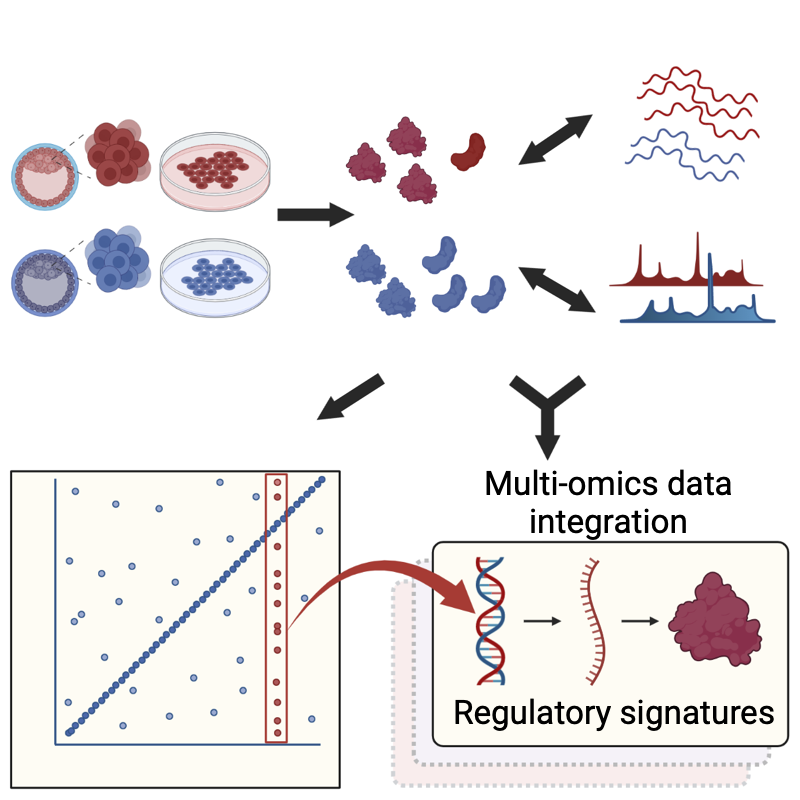
At JAX, that same spirit guides my work: using multi-omics approaches and systems genetics to understand how genetic variation shapes gene regulation and cell fate. I genuinely love that this field keeps moving, and that staying current means always learning something new — whether it’s a new statistical framework, a new data type, or a new biological system.
I use Diversity Outbred (DO) mice as a resource for systems genetics, studying how genetic variation influences gene regulation across molecular layers and cell states. More recently I’ve been expanding into single-cell approaches and new developmental contexts, including the developing palate. We also released QTLretrievR to make molecular QTL mapping more accessible to the community.
Making R and computational methods accessible to life scientists matters a lot to me — partly because most of my own skills were self-taught, and I know how much the quality of available resources shapes that experience. I’m a certified Posit (RStudio) Tidyverse Instructor and a certified Software Carpentry instructor, and I’ve taught workshops inside JAX and across the broader community.
Outside the lab, I stay actively involved in service and outreach — from scientific societies and postdoc organizations to community science events. One role I’m particularly glad to have had is serving on the Accessibility Subcommittee of the GSA Early Career Scientist Committees, working to make research environments more inclusive for scientists with disabilities.